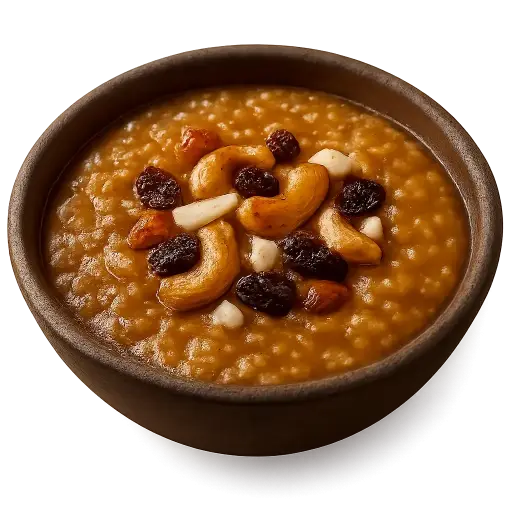
Sihi Pongal
Karnataka sweet pongal — rice and moong dal pressure-cooked together with water and jaggery until both dissolve into a thick, golden, glossy porridge, then coconut milk and cardamom added and the whole simmered briefly. Finished with a generous tempering of cashews, raisins, and dried coconut pieces fried in ghee until golden. The sihi (sweet) pongal differs from the Tamil chakarai pongal in its use of coconut milk alongside jaggery; the coconut milk gives the Karnataka version a more tropical, lightly floral sweetness. Served as the temple prasadam (specifically as an offering during Sankranti and other festivals) and as a breakfast sweet; eaten warm before the main meal on auspicious days. The most important sweet rice offering at Udupi's Sri Krishna Math temple.
Cuisines
Best for
Recipe
Ingredients
|
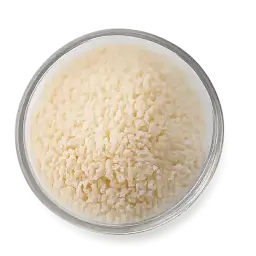
1 cup | Rice , raw |

|
1/4 cup | Moong Dal |

|
1 cup | Jaggery |

|
3 cups | Water |

|
1/4 cup | Ghee |

|
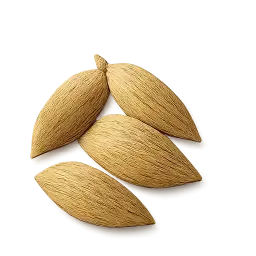
10 | Cashew , nuts |
|
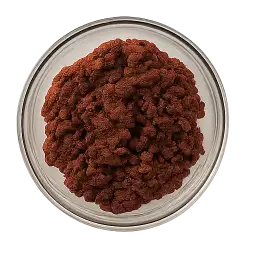
10 | Raisin |
|
1/4 teaspoon | Cardamom , powder |
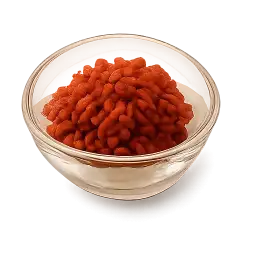
|
1 pinch | Saffron , strands |

|
1 pinch | Salt |
Instructions
- 1 Wash and soak the rice and moong dal together for 20 minutes.
- 2 In a pan, add water and bring it to a boil.
- 3 Add the soaked rice and moong dal to the boiling water.
- 4 Cook on medium heat until the rice and dal are soft and mushy.
- 5 In a separate pan, melt the jaggery with a little water to make a syrup.
- 6 Strain the jaggery syrup to remove any impurities.
- 7 Add the jaggery syrup to the cooked rice and dal mixture.
- 8 Stir well and cook for another 5-10 minutes until the mixture thickens.
- 9 In a small pan, heat ghee and fry the cashew nuts and raisins until golden.
- 10 Add the fried cashew nuts and raisins to the pongal.
- 11 Sprinkle cardamom powder and saffron strands over the pongal.
- 12 Mix well and serve hot.
Tips
For a richer taste, you can add a few tablespoons of coconut milk towards the end of cooking.